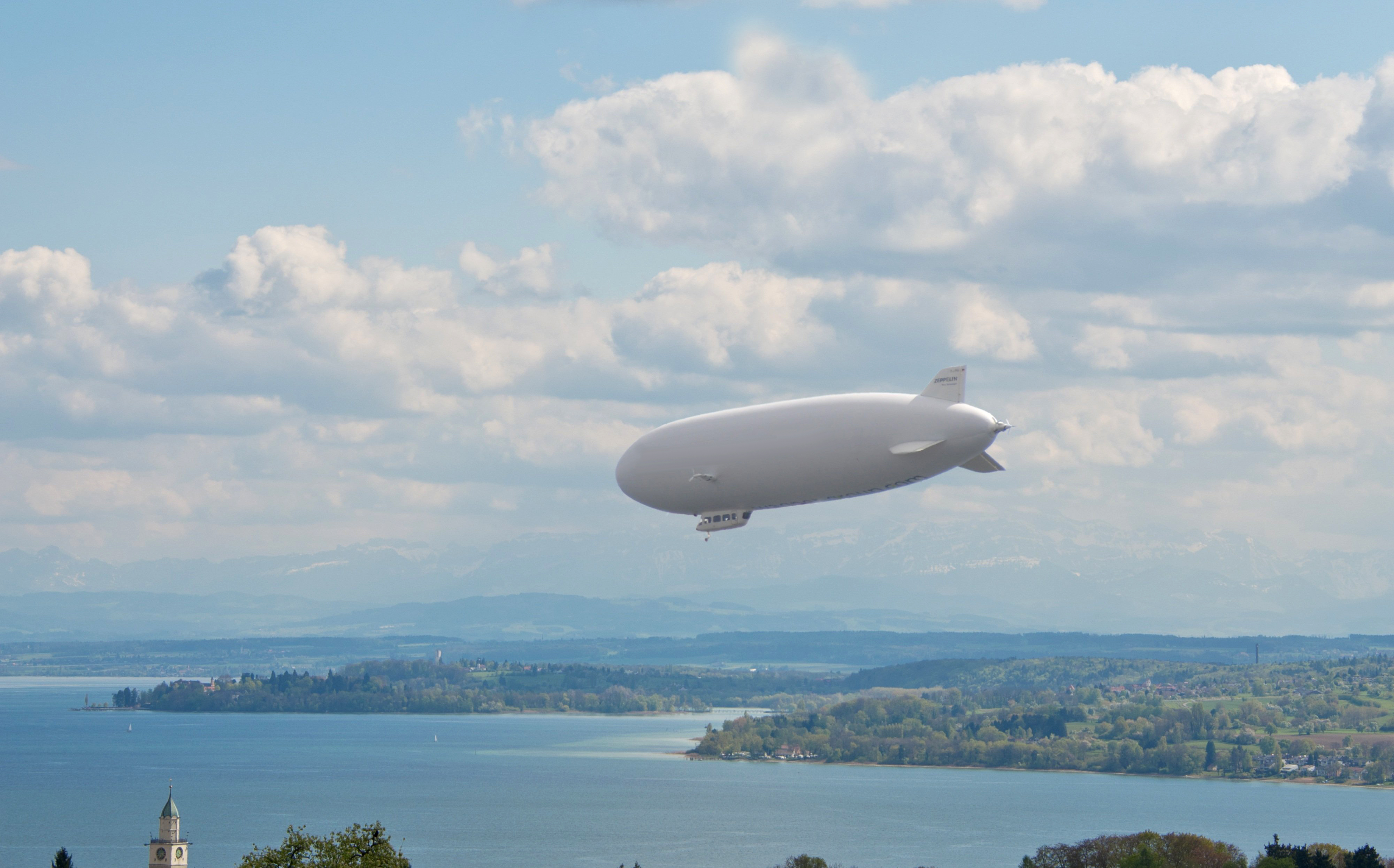
Zeppelin NT Airship
The Zeppelin NT program combined mathematical flight dynamics, system safety assessment, cockpit layout development and intensive maiden-flight preparation for a new-generation airship.
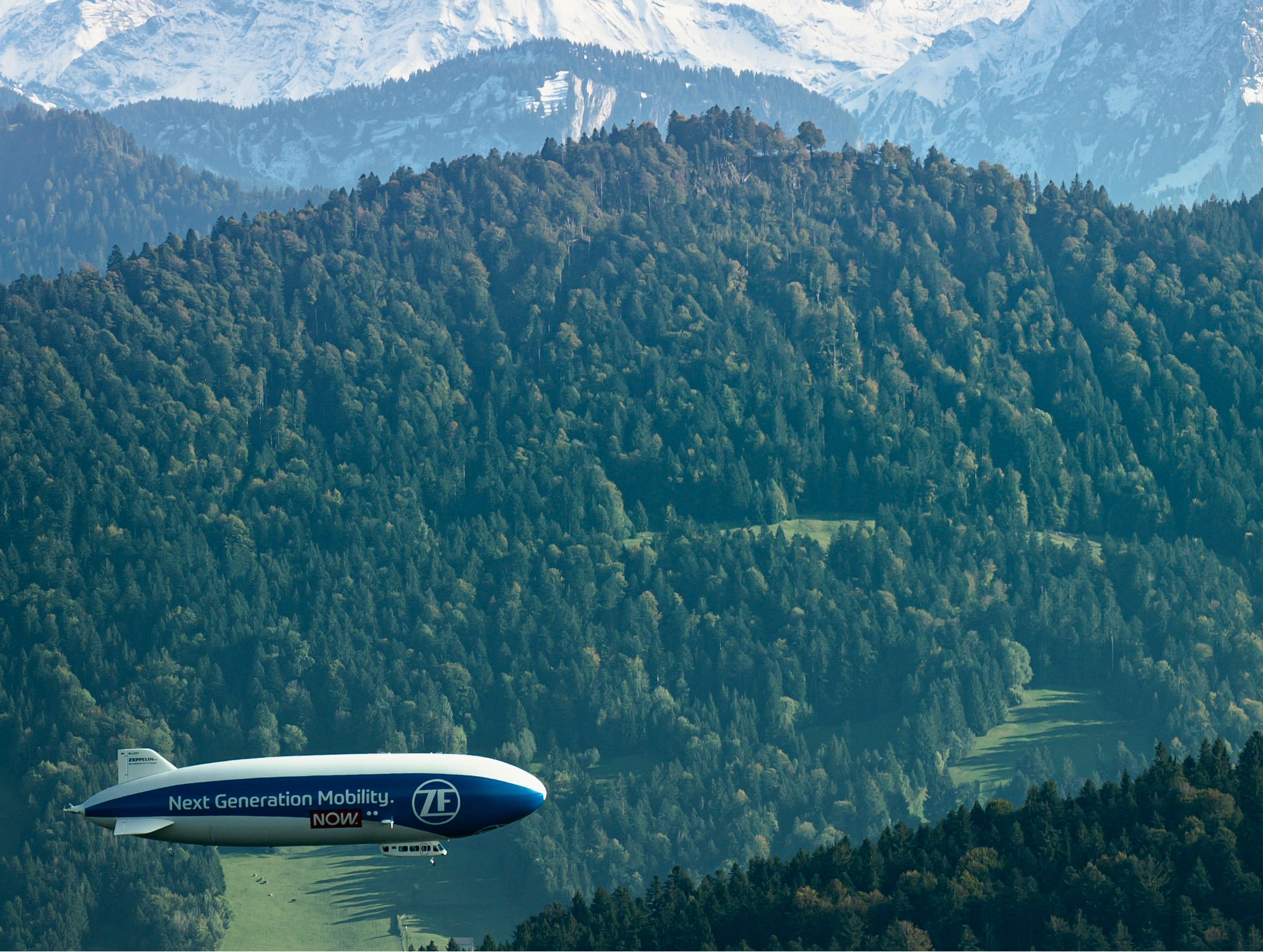
Key Contributions
- 6-degree-of-freedom flight dynamic model
- Load distribution and failure-hazard analysis
- Cockpit, instrument and window layout development
- Fly-by-wire redundancy concept
- Hazard assessment for maiden flight preparation
- Maiden flight as copilot with Captain Scott Dannecker
6-DOF Flight Dynamic Model
A mathematical six-degree-of-freedom flight dynamic model of the Zeppelin NT was developed to calculate the complete load distribution acting on the airship and to analyze flight dynamics during critical system-failure scenarios before the maiden flight.
Modeling Scope
The simulation included hull aerodynamics, stabilizer aerodynamics, atmospheric modeling, mass and inertia modeling of components, real-time actuator behavior, propulsion system modeling, gust modeling and an aircraft performance module. Wind-tunnel results from the University of Toronto were incorporated into the stabilizer aerodynamic model.
Full flight-dynamic simulation for load analysis, control behavior and hazard recognition during the first-flight campaign.
Cockpit Layout
Work on the cockpit layout included the instrument panel, overhead panel and the window and foot-window configuration. The goal was to support safe operation, clear visibility and intuitive pilot interaction during demanding flight phases.
Fly-by-Wire Redundancy Concept
A redundancy concept was developed for the fly-by-wire system, including the pilots’ primary controls, actuator mechanisms for all three engines, all four propellers, three engine swivel mechanisms and the three tail control surfaces.
Hazard Assessment
A detailed hazard assessment investigated all relevant components with respect to criticality, redundancy level, failure type, runaway behavior, early recognition and monitoring possibilities. Criticality was classified across five levels, from minor to catastrophic.
Maiden Flight Preparation
Preparation for the maiden flight included one year of emergency procedure development for vertical takeoff within the spatial constraints of the city of Friedrichshafen and the adjacent airport environment.
First Flight
The Zeppelin NT maiden flight was performed as copilot together with Captain Scott Dannecker, following extensive simulation, system-safety review and emergency-procedure preparation.